Stores
Construction site inventory: how to count stock without stopping work
You don't need to stop the site for a full stock take. Count a little, often, and approve every difference before it is written off.
Part of the guide to construction material tracking
On this page · 7 sections
Key takeaways
- Cycle counting checks a few items at a time on a rotating schedule, so work never stops.
- Count expensive, fast-moving items (cement, steel, cable) weekly and the rest monthly.
- Count blind: compare with the books only after counting.
- Look for a missing issue before calling a difference a loss.
- The person who counts should not be the person who approves the adjustment.
Cycle counting in construction
Construction site inventory stays accurate when it is counted little and often. A cycle count checks a handful of items each time instead of the whole store, on a rotating schedule, so the full stock is covered without a big shutdown count (Sortly). Work never stops, and mistakes are found while people still remember what happened.
How often to count site stock
Rank items by value and how fast they move, then count the top group most often. A common split counts the highest-value items weekly, the middle group monthly and the rest quarterly (Cleverence).
| Group | Typical items | Count |
|---|---|---|
| A: high value, fast moving | Cement, steel bars, electrical cable | Every week |
| B: steady use | Bricks, sand, crush, PVC pipe | Every month |
| C: slow or low value | Fixings, tools, consumables | Every quarter |
How to count without errors
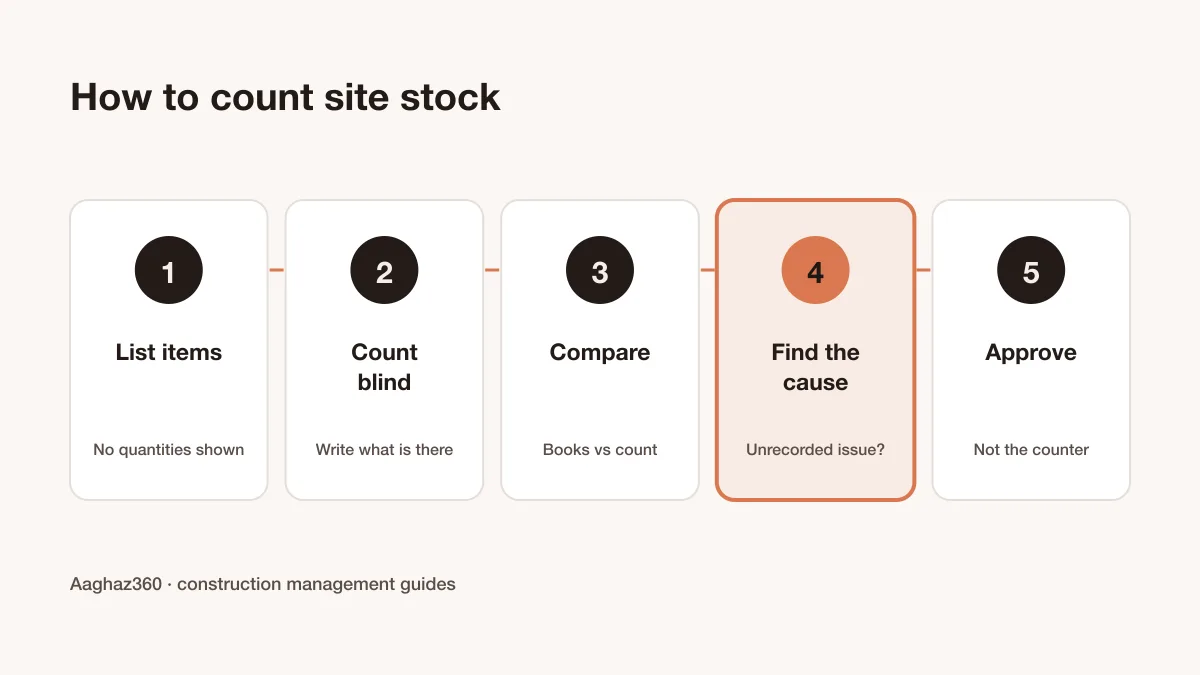
- 1Take the list of items to count, without the quantities the books expect.
- 2Count what is physically there and write it down.
- 3Compare with the books only after counting, so the count isn't nudged.
- 4Note anything damaged separately from anything missing.
Stock reconciliation: when the count doesn't match
A difference is either a recording mistake, such as an issue that wasn't written down or a delivery received short, or a real loss. Look for the missing record first: check the daily site report for material used, and the goods received notes for short deliveries. Whatever remains is an adjustment.
Categorise each difference, approve it, post the adjustment and note what will stop it happening again. Keep duties apart: the person who counts should not be the one who approves the adjustment (Cleverence).
What to do with leftover material when a project closes
Leftover material is money. Count the site store, transfer what is usable to the central store or the next site with a record of what left and what arrived, and write off only what is truly waste. The transfer record stops leftovers from quietly disappearing between sites, which matters most when you manage multiple construction sites. In construction site management software, a transfer is recorded out of one site's store and into the other's.
Questions people ask
What is cycle counting in construction?
Counting a small set of stock items on a rotating schedule instead of the whole store at once, so the full inventory is checked over time without stopping work.
How often should I count stock on a construction site?
Count high-value, fast-moving items such as cement, steel and cable every week, steady items like bricks and sand monthly, and slow or low-value items quarterly.
What should I do when the stock count doesn't match the books?
Look for a missing record first, such as an unrecorded issue or a short delivery. Whatever remains is an adjustment, which should be approved by someone other than the counter and recorded with a reason.
What happens to leftover material when a project ends?
Count it, transfer usable material to the central store or the next site with a record of what left and arrived, and write off only real waste.