Stores
Construction material tracking: how to stop losing cement, steel and bricks on site
Most missing material was never stolen. It went unrecorded at one of seven checkpoints between the site's request and the supplier's payment. Close them one by one.
On this page · 7 sections
Key takeaways
- Material goes missing at seven points: demand, approval, quotation, order, delivery, store issue and bill payment.
- Counting deliveries against the order, with a photo of the delivery note, is the single most valuable habit.
- Issue material from a store to named work, so regular counts can be checked against progress.
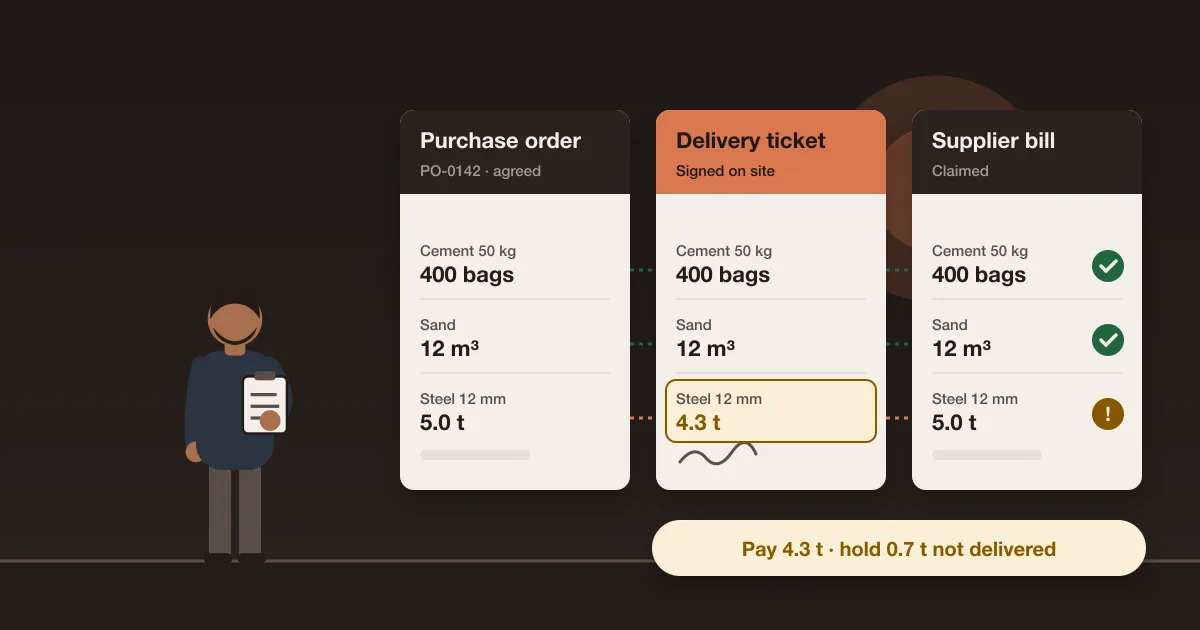
- Pay suppliers only for what matches both the order and what was received.
- Start with written demands, one approver and counted deliveries; add the rest once those are routine.
Why material goes missing on construction sites
Construction material tracking is the habit of recording every bag, bar and brick at each point it changes hands: when the site asks for it, when someone approves it, when it is ordered, delivered, issued to work and paid for. When one of those links lives only in someone's head or a WhatsApp chat, the numbers stop adding up, and nobody can say whether 40 bags of cement went to the right house.
Theft happens, but it is rarely the main leak. Far more often a delivery arrives short and is paid in full, the same steel is ordered twice by two engineers, or material is used on the wrong floor and never recorded. A benchmarking study of 40 completed building projects found substantial material over-use, with wood, bricks and steel the most wasteful by cost and labour-only subcontracts producing the most waste (Engineering, Construction and Architectural Management).
How to track material on a construction site: the seven checkpoints
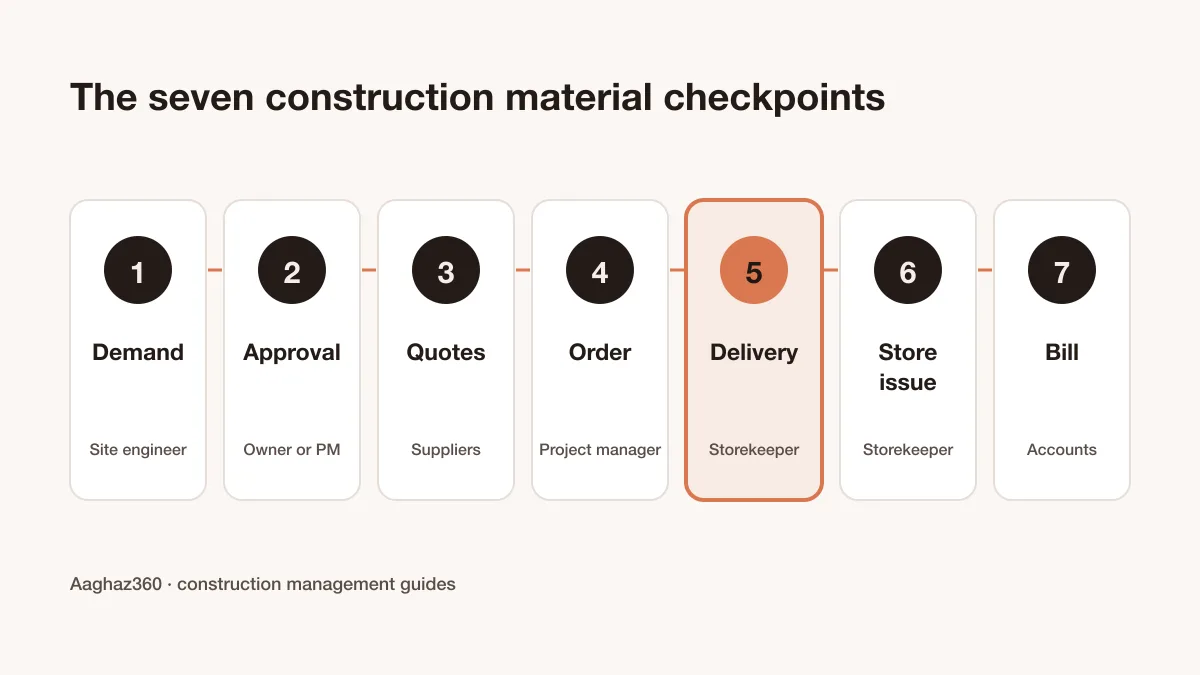
- 1Write every demand down, with a date.
Material, quantity, project, phase and the date it is needed, in one place rather than a voice note: a material requisition form does the job. A written demand is the only thing an order can later be checked against. - 2Approve before anyone orders.
One named person approves, changes the quantity or sends it back. This is where double orders get caught: two engineers asking for the same steel for the same slab. - 3Compare quotations on the same terms.
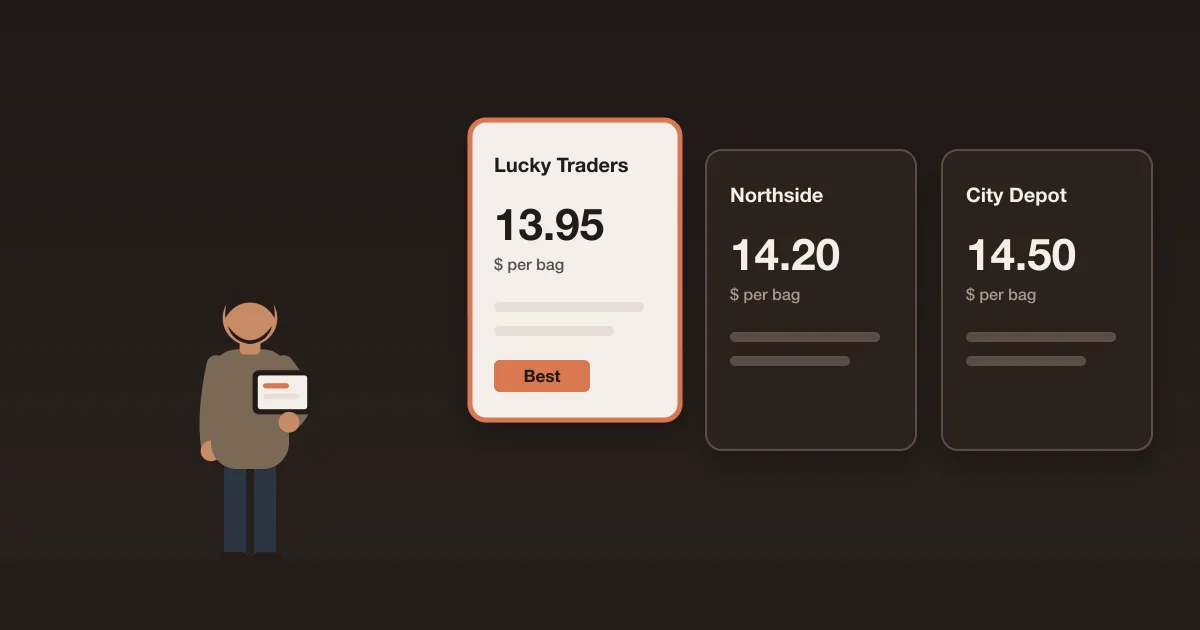
Rate alone misleads. Put rate, delivery charge, delivery date and payment terms side by side, as in how to compare supplier quotations. - 4Send a written order.
Items, rates, delivery site, who receives, payment terms, and an order number the supplier quotes back on the delivery note and the bill. A purchase order template has a place for each. - 5Receive against the order.
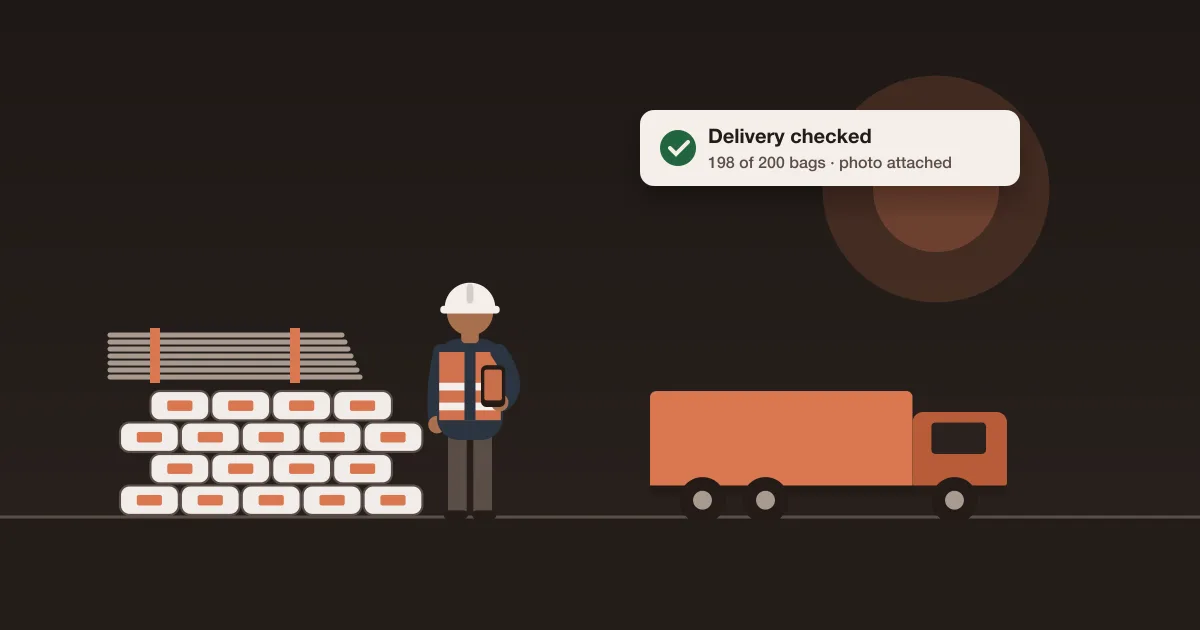
Count what arrived, note any shortfall or damage, and photograph the delivery note. This is the most skipped step and the one that saves the most money. - 6Issue from the store, not straight to work.
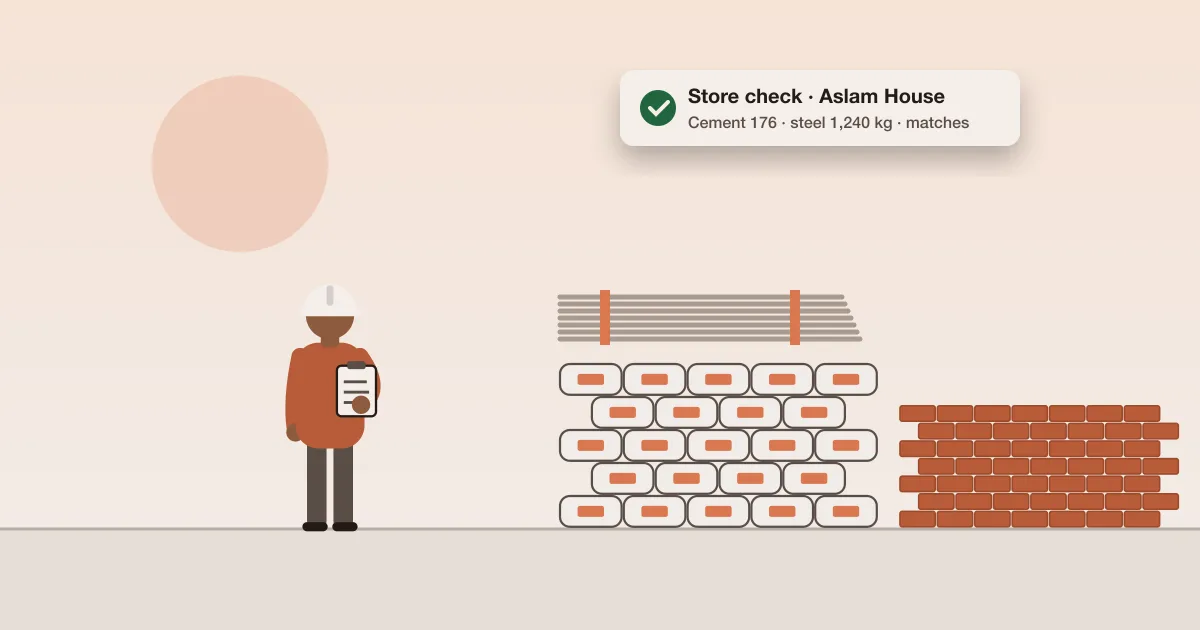
Material goes into the site store first and is issued to the work it is used on, so a regular stock count can be checked against progress. - 7Match the bill before paying.
Pay only what matches both the order and what was received, and charge it to the right project and phase. The three-way match guide shows how, line by line.
Receiving deliveries: the goods received note
Suppliers bill for what they loaded, not what reached your site. A goods received note (GRN) is the site's own record of what actually arrived: the order number, each item, the quantity counted, anything short or damaged, who received it and when. Without it, a 198-bag delivery is paid as 200 and the difference never appears anywhere. Over a year of deliveries, those two-bag gaps become real money.
How to stop material theft on a construction site
Records do most of the work, because missing material is only noticed when someone expected it to be there. Physical measures close the rest of the gap, and guidance from insurers and contractors is consistent (Beneva):
- Order closer to need, so large stockpiles do not sit on site for weeks.
- Keep cement, fittings and tools in a lockable store with one named keeper.
- Fence and light the site, and keep one entry point where deliveries are checked.
- Sign material out to named people or work, and count expensive items every week.
- Check that the people on the wage sheet are the people who actually worked.
Material management in construction: where to start on Monday
You don't need to fix everything at once. If you can only change three things this week, start with checkpoints 1, 2 and 5: written demands, one approver and counted deliveries. Together they catch most losses. Add written orders, store issues and bill matching once those are routine. For the buying side in full, from planning order dates to paying the bill, follow the construction material procurement process.
A daily material log helps too: what was delivered, used and left on each site, updated the same day so nobody orders what is already there (Stone Building). Pair it with a daily site report so material used sits next to the work it was used for, and with construction procurement software and construction inventory management software once the habits are in place.
Check your site today
0 of 7 in placeTick what is already in place on your site.
Questions people ask
How do you track material on a construction site?
Record it at seven points: a written demand, one approval, compared quotations, a written order, a counted delivery with a goods received note, an issue from the site store to named work, and a bill matched against the order and delivery before payment.
What is a goods received note in construction?
It is the site's record of what actually arrived against a purchase order: each item, the quantity counted, anything short or damaged, who received it and when. The bill is checked against it before the supplier is paid.
How can I stop material theft on my construction site?
Keep stock low by ordering closer to need, lock cement and fittings in a store with one keeper, check every delivery at one entry point, sign material out to named work, and count expensive items weekly so a loss is noticed within days.
Which materials are wasted most on building sites?
A study of 40 completed building projects found wood, bricks and steel the most wasteful materials by cost, with labour-only subcontracts producing the most waste.