Purchasing
How to compare supplier quotations for construction material
Three quotations protect your price. Collecting them by phone costs more time than most sites have, and quotes from three different calls can't be compared anyway.
Part of the guide to construction material procurement process
On this page · 7 sections
Key takeaways
- Send one written request for quotation to every supplier, with the same items, quantities, site and date.
- Compare four things, not one: rate, delivery charge, delivery date and payment terms.
- Work out the landed cost on site per unit; that is the real price.
- The best quotation is often not the cheapest rate.
- Split an order between suppliers when each is best for a different item.
Why compare supplier quotations at all
To compare supplier quotations fairly, every supplier has to answer the same question at the same time. One rate tells you nothing; two can be arranged. Three, asked the same way, show you the market for that item this week and give whoever approves the order a reason that can be written down.
Write one request for quotation for everyone
A request for quotation (RFQ) is a written request asking suppliers to price specific items. Vague specifications produce bids that can't be compared, so state everything (FirstBit):
- Item, size or grade: for example OPC cement 50 kg, or deformed steel bar 12 mm.
- Quantity and unit.
- Delivery site and the date you need it.
- Payment terms you can offer: advance, on delivery or credit days.
- How long the quotation must stay valid, and a deadline to reply by.
Build a quotation comparison sheet
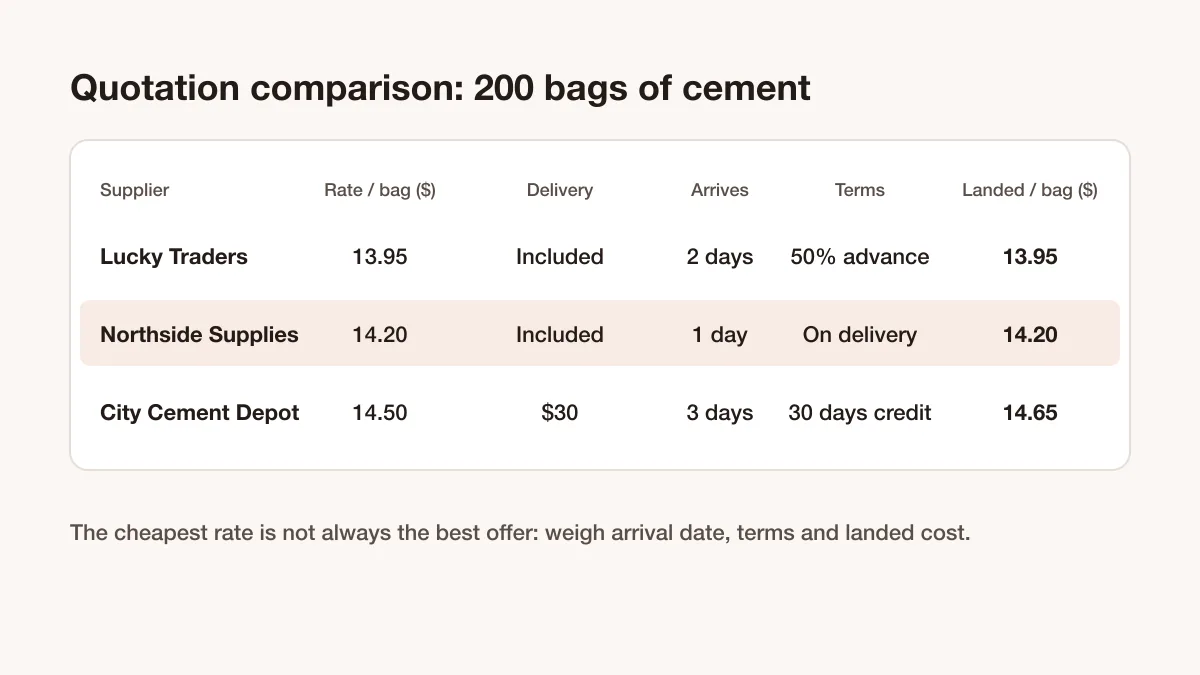
| Supplier | Rate / bag ($) | Delivery | Arrives | Terms |
|---|---|---|---|---|
| Lucky Traders | 13.95 | Included | 2 days | 50% advance |
| Northside Supplies | 14.20 | Included | 1 day | On delivery |
| City Cement Depot | 14.50 | $30 | 3 days | 30 days credit |
Work out the landed cost, not just the rate
The landed cost is what one unit costs once it is unloaded on your site: the rate plus delivery, unloading and any charges, divided by the quantity. A rate that excludes delivery can end up dearer than a higher rate that includes it. Use landed cost in your estimates too (how to estimate construction costs).
Then weigh time and cash. A cheaper rate arriving a week late can cost more in idle labour than it saves. Credit terms are worth money when cash is tight, which matters if your own client payments arrive late; a big advance is a risk if the supplier delivers short.
Cheapest quotation vs best quotation
The best offer is the one that arrives when needed, on terms you can meet, from a supplier who delivers what was ordered. Record why the winner won. Next time, that note plus the supplier's delivery history from your goods received notes makes the choice faster.
If one supplier is cheapest on steel and another on cement, split the order and give each item to whoever is best for it. Each part then goes on its own purchase order, with the quoted rates and the date it is needed on site.
Questions people ask
How many quotations should I get for construction material?
Three is the usual minimum for anything significant: enough to see the market price that week and to justify the choice to whoever approves the order.
What is a request for quotation in construction?
A written request asking suppliers to price specific items, quantities and a delivery date on stated terms, so that every reply answers the same question and can be compared.
How do I compare quotations with different payment terms?
Put rate, delivery charge, delivery date and payment terms side by side, work out the landed cost per unit, then weigh the value of credit days against the risk of paying an advance.
Should I always choose the cheapest quotation?
No. A lower rate that excludes delivery, arrives late or needs a large advance can cost more overall. Choose the best landed cost and timing from a supplier that delivers what was ordered.